Escape Rooms as a Tool for Enhancing Strategic Thinking and Problem Solving Skills
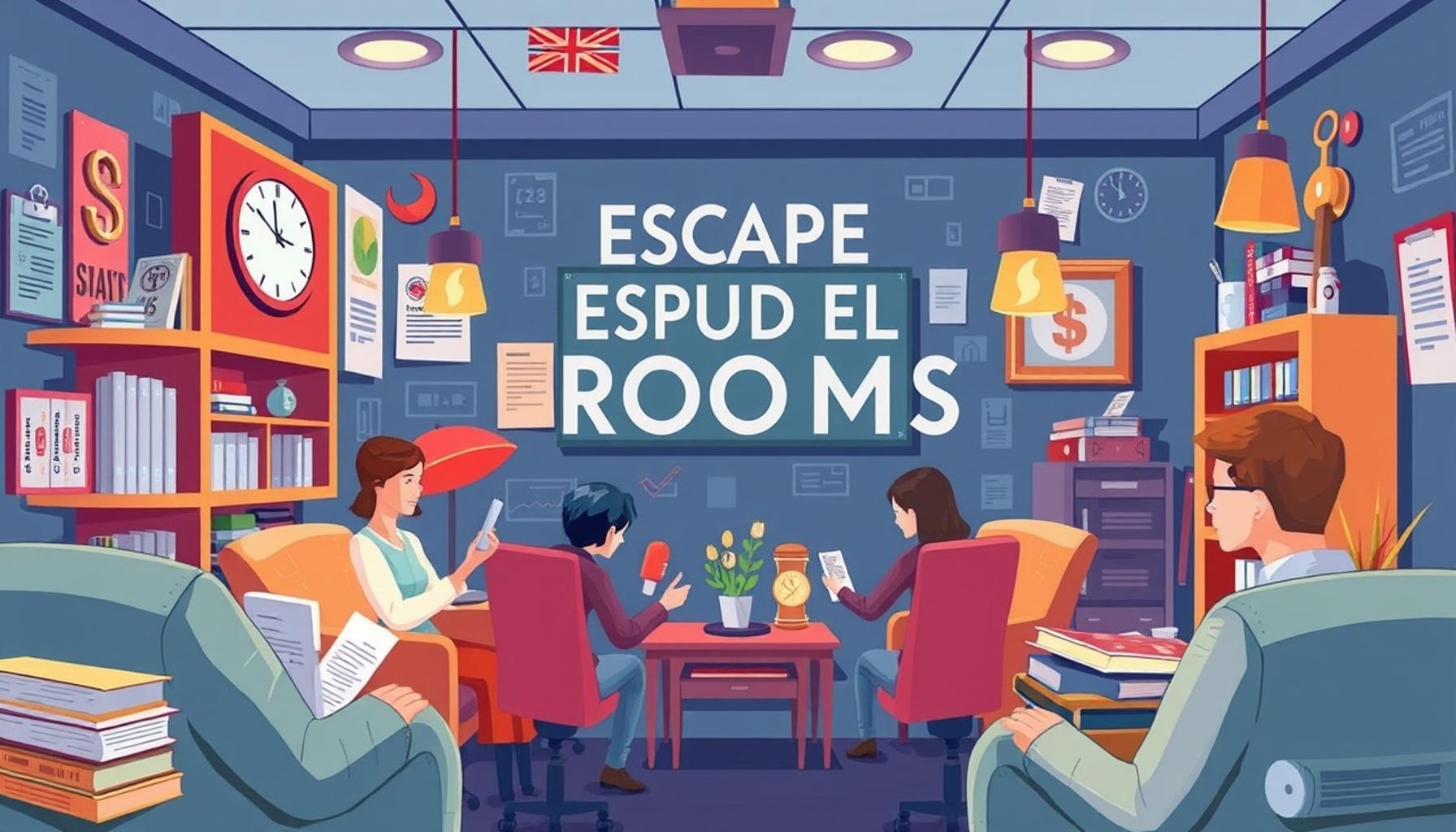
Unlocking Potential through Escape Rooms
In today’s fast-paced world, strategic thinking and problem-solving skills are more critical than ever. With challenges rapidly evolving across industries, innovative methods for training these skills are in high demand. Enter escape rooms—immersive experiences designed to stimulate the mind and foster teamwork.
Why are escape rooms gaining popularity as a training tool? Consider the following features:
- Collaborative Learning: Teams must communicate effectively to solve puzzles. This dynamic encourages participants to share ideas and insights, which fosters a spirit of collaboration. A study by the University of Minnesota highlighted that teamwork in high-pressure scenarios enhances group cohesion, allowing individuals to leverage each other’s strengths.
- Real-Time Decision Making: Participants face time constraints, mirroring real-world pressure. For example, a typical escape room challenge may require teams to decipher clues and solve intricate puzzles within a 60-minute timeframe. This experience forces participants to think quickly and devise strategies under stress, a skill that is essential in any high-stakes workplace environment.
- Creative Problem-Solving: Challenges demand outside-the-box thinking. Completing an escape room often requires unconventional solutions, encouraging individuals to break free from rigid thought patterns. According to Harvard Business Review, companies that promote creativity in their teams see a 1.5 times greater likelihood of being market leaders.
Escape rooms provide a unique environment where participants can explore their creativity while sharpening their critical thinking skills. Studies suggest that engaging in such activities can lead to improved cognitive function and enhanced group dynamics. Not only do participants enjoy the thrill of escaping, but they also develop invaluable competencies such as adaptability and analytical thinking.
From corporate team-building exercises to educational programs, the adaptability of escape rooms makes them an ideal choice for diverse environments. Many organizations in the United States have integrated escape rooms into their training programs. For instance, companies like Google and Amazon utilize similar experiences as a way to enhance workforce skills. As organizations increasingly seek practical ways to cultivate a skilled workforce, escape rooms offer an engaging, hands-on approach that’s hard to resist.
Join us as we delve deeper into how escape rooms can serve as a potent tool for enhancing strategic thinking and problem-solving skills. Whether used for employee training or educational initiatives, the benefits of participating in an escape room extend far beyond just fun and games. They cultivate essential skills that resonate in the workplace, making them a valuable investment for any forward-thinking organization.

DISCOVER MORE: Click here to dive deeper
Experience-Based Learning that Transforms Mindsets
Escape rooms are not just an entertaining diversion; they are meticulously designed scenarios that provide a platform for experience-based learning. This interactive environment fosters an ideal breeding ground for developing critical strategic thinking and problem-solving skills. By immersing participants in a narrative filled with challenges, escape rooms push players to confront dilemmas that require innovative thought processes and collaborative strategies.
The following aspects of escape rooms are instrumental in honing these essential skills:
- Scenario-Based Challenges: Each escape room has a distinct theme, requiring players to adapt their strategies according to the narrative at hand. For instance, a mystery-themed escape room may challenge participants to think like detectives, employing deductive reasoning and analytical skills. According to a report from Boston Consulting Group, scenario-based training can improve decision-making by 20% in leaders, making this approach particularly valuable in corporate settings.
- Resource Management: After entering the locked room, teams often find a limited number of clues or tools at their disposal. This constraint encourages players to effectively manage resources while maximizing their output. Learning to prioritize and allocate limited resources can enhance strategic planning skills, skills that are indispensable in any organizational framework.
- Feedback Loops: Many escape rooms provide immediate feedback during the game, allowing participants to reassess their approaches on the fly. This feedback mechanism is vital for developing a growth mindset. Research from Carol Dweck at Stanford University shows that a growth mindset significantly enhances cognitive flexibility, crucial for tackling complex problems.
Moreover, escape rooms deepen participants’ understanding of teamwork dynamics. Through shared challenges, team members naturally assume varying roles—leaders emerge, ideas are exchanged, and problem-solving processes are refined. This living laboratory showcases the importance of different perspectives and equips teams with tools to tackle real-world complexities collaboratively.
As organizations continue to seek innovative methods to develop talent, escape rooms serve as a versatile tool across various sectors. In the educational landscape, faculty members have recognized their potential for fostering skills beyond traditional classroom instruction. Schools and colleges are now integrating escape room concepts into their curricula to enhance critical thinking and problem-solving abilities in students.
From corporate training sessions to academic explorations, the diverse applications of escape rooms demonstrate their effectiveness in improving both strategic thinking and problem-solving capabilities. As we further explore the multifaceted benefits of escape rooms, it becomes evident that these experiences are not merely recreational; they are transformative tools designed to unlock human potential in the face of uncertainty.
Exploring the Mechanisms Behind Escape Rooms
Escape rooms are not merely entertaining diversions; they serve as interactive landscapes where participants actively engage in complex problem-solving scenarios. The dynamic nature of escape rooms fosters an environment rich in strategic thinking, prompting players to navigate through challenges and unlock puzzles under time constraints. Here are two pivotal mechanisms that illustrate how escape rooms enhance these skills:
| Category | Description |
|---|---|
| Collaborative Problem Solving | Enhances teamwork as players communicate, delegate roles, and merge their individual strengths to reach a common goal. |
| Critical Thinking Under Pressure | Sharpens analytical skills as participants must assess situations quickly and make immediate decisions to progress in the game. |
This blend of collaborative problem solving and critical thinking under pressure establishes a unique learning environment that mimics real-world scenarios, preparing individuals for complex challenges outside the escape room’s confines. Such experiences extend beyond mere gameplay; they cultivate essential life skills that are beneficial in educational and professional contexts alike. As a result, escape rooms become invaluable tools in education and corporate training, enabling individuals to refine their strategic thinking and problem-solving abilities. Whether in a school setting or a corporate training session, the immersive nature of escape rooms inspires participants to think creatively and work effectively under duress.
DISCOVER MORE: Click here to learn more about mind puzzles in team-building
Building Resilience Through Challenging Scenarios
One of the overlooked aspects of escape rooms is their ability to cultivate resilience among participants. In a high-pressure environment where every second counts, team members often encounter setbacks that require them to rethink their strategies rapidly. This aspect of gameplay simulates real-world business challenges, where adaptability is crucial. Studies have shown that teams that regularly engage in activities promoting resilience tend to outperform their competitors, as they can rebound quickly from adversities.
Moreover, the psychological safety found in the unique environment of an escape room allows participants to experiment without fear of failure. A study published in the Harvard Business Review notes that fostering a culture where employees can safely explore new ideas without the anxiety of immediate repercussions leads to enhanced innovation. As players engage in various tasks, they learn that mistakes can be valuable learning experiences—a mindset that translates seamlessly into workplace environments.
Communication as a Key Component
Effective communication plays a pivotal role in successfully navigating the numerous puzzles of an escape room. Participants must articulate their thoughts, share discoveries, and coordinate actions to progress. Studies have shown that team communication can improve productivity by as much as 25%. Escape rooms provide a practical setting for this enhancement, as the need for clarity and collaboration becomes immediate. For instance, a team locked in a “space mission” themed room may need to communicate critical information during a time-sensitive challenge, emphasizing the importance of conveying ideas succinctly under pressure. This type of dynamic fosters a level of camaraderie that can be beneficial in real-world professional settings.
Innovation Through Diverse Perspectives
Another significant advantage of escape rooms is their facilitation of diversity of thought. In many cases, participants come from various backgrounds and professions, contributing different perspectives and problem-solving approaches. A report from the McKinsey Global Institute highlights that diverse teams are 35% more likely to outperform their homogenous counterparts in terms of innovation and financial performance. When team members bring their own unique experiences to the table, they often devise novel solutions that wouldn’t have emerged in a more uniform group. Escape rooms encourage this blend of thought processes, allowing participants to refine their strategic thinking by considering alternatives they may not have previously encountered.
Furthermore, the interactive nature of escape rooms fosters engagement that is often lacking in traditional training methods. According to a survey by the Association for Talent Development, organizations that incorporate experiential learning strategies observe an increased retention rate of around 75% compared to the 10-20% retention rate typically seen in lecture-based environments. As teams work together to escape, they engage their minds and transform abstract concepts into tangible skill sets that can be utilized back in the workplace.
In light of these compelling attributes, it’s evident that escape rooms serve as comprehensive tools for enhancing strategic thinking and problem-solving skills. Their unique combination of real-time challenges, collaboration, and diverse interactions creates an environment ripe for personal and professional growth. As organizations aim to equip their teams with the skills necessary to thrive in an ever-changing landscape, embracing the experiences offered by escape rooms will undoubtedly yield transformative results.
DIVE DEEPER: Click here to discover more
Unlocking Potential Through Escape Rooms
In conclusion, the unique dynamics of escape rooms make them powerful tools for enhancing strategic thinking and problem-solving skills. By fostering resilience in participants, these engaging environments mimic the high-pressure situations prevalent in various professional settings. As teams confront challenges together, they enhance their adaptability and innovative thinking, vital traits for navigating today’s fast-paced business landscape.
Moreover, the emphasis on effective communication and collaboration within escape rooms fosters pivotal team dynamics. The necessity for clear articulation and the rapid exchange of ideas not only boosts productivity but also nurtures interpersonal relationships among team members. This camaraderie is essential for any organization looking to thrive.
Adding to the richness of the experience is the diversity of thought that escape rooms promote. By bringing together individuals from varied backgrounds, organizations harness a plethora of perspectives that can lead to innovative solutions and heightened creativity—factors proven to impact a team’s performance positively. With research indicating improved retention rates when engaging in experiential learning, escape rooms also provide lasting educational benefits that conventional training often lacks.
Ultimately, as companies seek to equip their workforce with the essential skills needed to overcome modern challenges, embracing escape room experiences offers both a fun and effective strategy for growth. This innovative approach not only develops critical competencies but also inspires a culture of collaboration and resilience that can propel organizations forward.
Related posts:
The Influence of Strategic Thinking in Competitive Board Games and Their Impact on Cognitive Develop...
The Power of Sudoku: Developing Strategic Thinking Through Number Puzzles
The Psychological Benefits of Engaging in Strategic Mind Games and Puzzles
Mind Games: Enhancing Strategic Thinking Through Chess and Board Games
Solving the Maze: How Strategy Board Games Improve Critical Thinking Skills
Using Logic Puzzles to Develop Strategic Thinking Skills in Everyday Life

Linda Carter is a writer and puzzle expert specializing in mind games, brain teasers, and cognitive challenges. With extensive experience helping individuals enhance their problem-solving skills and think critically, Linda shares her knowledge on our platform. Her goal is to empower readers with practical advice, engaging puzzles, and strategies to sharpen their minds and achieve success in the captivating world of mind games and puzzles.