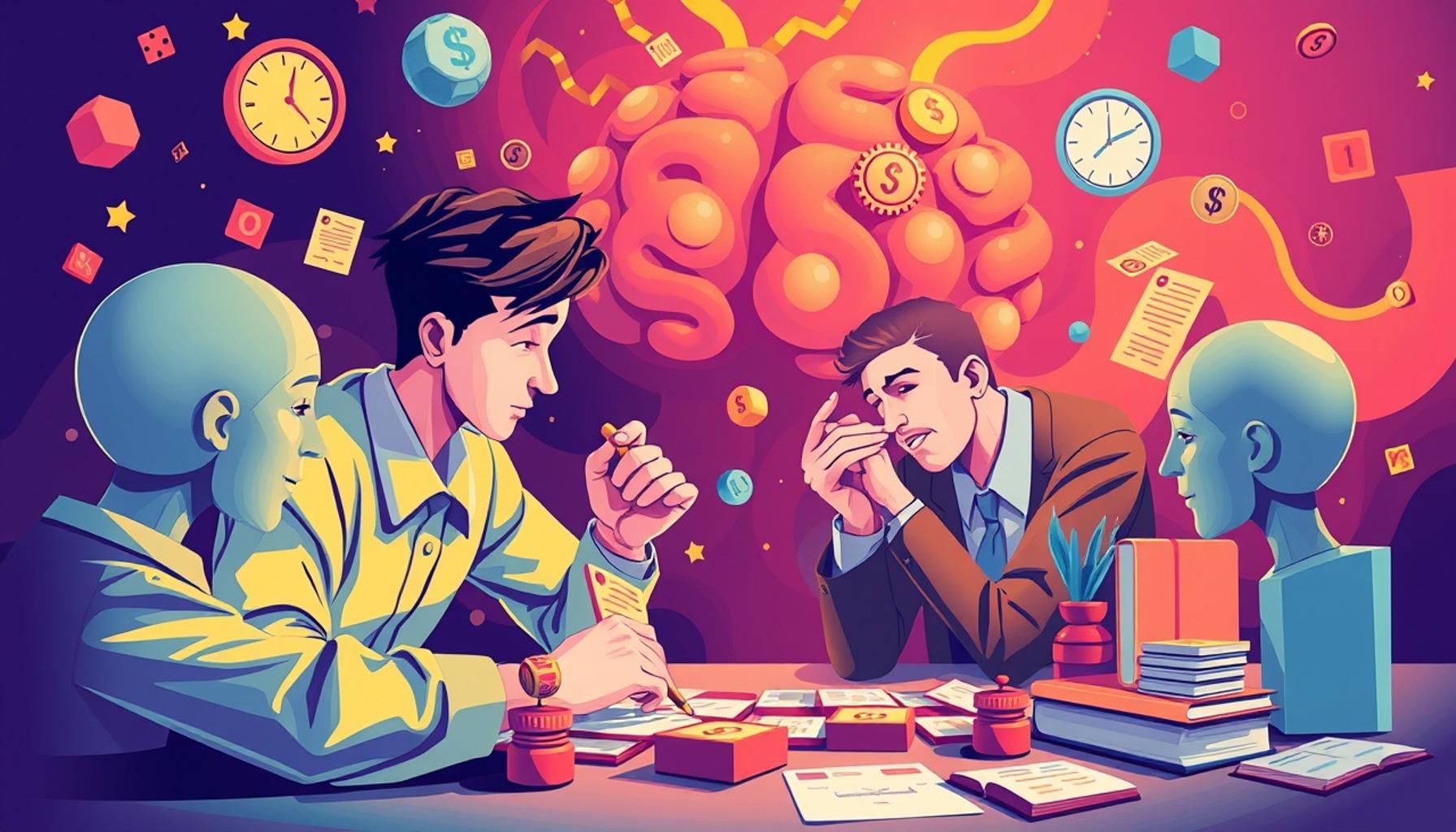
The Impact of Mind Games on Cognitive Flexibility
Cognitive Flexibility: The Brain’s Adaptation Superpower
In an era where change is the only constant, adapting your thought processes can be a significant asset. Cognitive flexibility enables individuals to tailor their thinking to new, unexpected, or complex situations. This adaptability is akin to a mental gymnastic exercise that enhances one’s ability to shift perspectives, thereby improving problem-solving capacities in diverse contexts.
A key strategy to cultivate this invaluable skill lies in the realm of mind games. These engage our brains in playful yet challenging scenarios, honing our cognitive abilities while delivering immense satisfaction. Mind games encompass a broad spectrum of activities, each offering distinct benefits that contribute to a more agile mind. Here are several popular examples:
- Puzzle games: Crosswords and Sudoku are familiar fixtures in many American newspapers and mobile apps. These games promote critical thinking and often encourage players to strategize on how to fill in answers, enhancing both vocabulary skills and numerical reasoning.
- Strategy games: Classic games like chess and Go not only challenge players to think several moves ahead but also develop their capacity to adapt to opponents’ strategies. Tournaments held across the United States have shown that players who master these games become better at making quick yet informed decisions.
- Memory games: Activities such as matching card games sharpen not just short-term memory but also long-term recall. These games can be enjoyed solo or in groups, enhancing both cognitive function and social interaction.
Studies have shown that engagement in these cognitive activities results in significant benefits: increased mental acuity, improved problem-solving skills, and enhanced cognitive flexibility. For instance, a study published in a prominent psychology journal indicated that regular chess players show notably higher levels of cognitive flexibility compared to their non-playing peers—illustrating how strategic games can function as powerful tools for mental development.
This exploration into the impact of mind games on cognitive agility uncovers valuable insights into effective brain training. By weaving fun into the fabric of serious cognitive enhancement, players not only enjoy the pursuit of leisure but also embark on a journey towards sharpening their mental faculties. As we continue to investigate these activities, it becomes clear that the road to cognitive improvement can indeed be paved with enjoyable challenges.
The Science Behind Mind Games and Cognitive Flexibility
The relationship between mind games and cognitive flexibility is deeply rooted in neuroscience and psychology. Engaging in various mental exercises stimulates different parts of the brain, contributing to an enriched neural network that supports adaptability. Cognitive flexibility entails the ability to switch between thinking about different concepts or to think about multiple concepts simultaneously. This complex ability is vital for effective problem-solving and is often mapped through brain imaging studies that reveal increased activity in regions associated with decision-making and task-switching.
Numerous studies have established that regularly playing mind games can significantly enhance cognitive flexibility. The variety in mind games offers specific cognitive challenges that encourage players to adapt their strategies based on evolving circumstances. For instance, in a study by the University of Michigan, participants who engaged in puzzle-solving and strategic board games for just a few hours a week showed notable improvements in both cognitive flexibility and working memory. The researchers concluded that the mental demands of these activities not only improve critical thinking skills but also help in adapting thought processes to novel situations.
Incorporating mind games into daily routines can lead to a structure of consistent cognitive exercise. Here are some key benefits derived from various types of mind games:
- Enhanced Problem-Solving Skills: Engaging in challenging puzzles encourages players to devise multiple solutions to complex problems, boosting their ability to approach challenges from different angles.
- Improved Adaptability: Strategy games, such as Risk or Settlers of Catan, push players to react dynamically to competitors’ moves, refining their decision-making abilities.
- Increased Focus and Memory: Games designed to enhance memory, like Lumosity, not only improve retention but also emphasize the importance of attention in cognitive flexibility.
Moreover, the social aspect of multiplayer mind games adds another layer of cognitive engagement. Participating in these games fosters communication skills and teamwork, both of which are essential for adapting and adjusting viewpoints. For example, a group of friends tackling a cooperative puzzle game will inevitably need to negotiate different ideas and strategies, thereby enhancing their mental agility in real-time.
While anyone can pick up a crossword or engage in a game of chess, the key to realizing these cognitive benefits lies in consistency and challenge. Continued engagement with progressively more challenging mind games can result in substantial gains in cognitive flexibility, paving the way for improved performance in academic and professional settings. A balanced combination of enjoyment and challenge in mind games nurtures not only the mind but also strengthens one’s capacity to adapt to life’s multifaceted demands.
The Impact of Mind Games on Cognitive Flexibility
Mental agility plays a crucial role in our everyday decision-making processes and problem-solving abilities. Mind games, often seen as mere entertainment, have been increasingly recognized for their ability to enhance cognitive flexibility. Cognitive flexibility refers to the brain’s capacity to adapt to new information and switch between thinking about two different concepts. It is vital for creativity as well as effective learning, allowing individuals to tackle challenges from various angles.
Engaging in mind games such as puzzles, strategy-based games, and brain teasers can provide substantial benefits in this regard. These activities require players to strategize, make quick decisions, and often adjust their plans based on the evolving context of gameplay, thereby promoting flexible thinking. For instance, games like chess and Sudoku demand a high level of mental adaptability and foresight, enhancing one’s ability to consider multiple perspectives and approach problems creatively.
Furthermore, research has shown that regular participation in such cognitive activities can result in improved executive function skills, which are crucial for managing thoughts and actions in response to changing situations. Interestingly, the effects are not limited to the context of gaming; they translate into everyday life, allowing improvements in work tasks, academic performances, and overall mental health.
Ultimately, mind games serve as more than just leisure activities; they are powerful tools for cognitive development. By fostering an environment that encourages flexible thinking, we can nurture better problem solvers and innovators in various fields.
| Advantages of Mind Games | Benefits on Cognitive Flexibility |
|---|---|
| Enhanced Problem Solving Skills | Encourages innovative thinking and adaptability in various scenarios. |
| Increased Mental Stamina | Improves focus and attention, leading to better performance in tasks requiring concentration. |
The effectiveness of mind games in enhancing cognitive flexibility underscores the importance of incorporating such activities into our daily routines. By doing so, we not only enjoy our leisure time but also contribute positively to our mental resilience and cognitive skill set, paving the way for further exploration into the exciting world of mental agility.
Exploring Different Types of Mind Games and Their Effects
Mind games can be broadly categorized into several types, each offering unique cognitive challenges that contribute distinctly to enhancing cognitive flexibility. From traditional board games to modern video games, these activities require strategic thinking, quick adjustments, and innovative problem-solving, showcasing the versatility of cognitive exercise.
Board Games have stood the test of time as effective cognitive enhancers. Games like chess and Go demand that players think several moves ahead, considering not only their strategy but also the opponent’s potential countermoves. Research from the University of Sydney indicates that regular chess players demonstrate better cognitive control and flexibility due to the need to constantly re-evaluate their strategies amidst evolving game conditions. This dynamic interaction imbues players with the ability to pivot their thought processes effectively, an essential trait in real-life decision-making scenarios.
Card Games such as poker and bridge also contribute significantly to cognitive flexibility. These games require players to read non-verbal cues and adapt their strategies based on incomplete information. A study published in the journal Psychological Science highlighted that poker players exhibited enhanced executive function abilities, suggesting that the unpredictable nature of the game aids in developing mental resilience. Engaging in such high-pressure environments fosters rapid cognition and adaptability, important skills for navigating everyday challenges.
Video Games have emerged as powerful tools for cognitive enhancement in recent years. Action games, in particular, require players to make split-second decisions and adapt to shifting challenges in real-time. Research from the University of California, Irvine, has shown that individuals who frequently play action games perform better in tasks requiring cognitive flexibility, as they are trained to handle multiple stimuli and evaluate different outcomes simultaneously. In addition, educational video games are designed to enhance specific cognitive skills and offer immediate feedback, allowing players to adjust their strategies on-the-fly, which is pivotal for mental agility.
Moreover, the cognitive impact of online puzzle games cannot be underestimated. Games that focus on logic and problem-solving, such as Sudoku and escape room challenges, necessitate lateral thinking, which is crucial for enhancing cognitive flexibility. A study conducted by the University of Chicago suggested that individuals who regularly engage in these types of games show improved performance in tasks requiring non-linear thinking. This makes them more adept at finding innovative solutions to problems they may encounter in daily life.
The benefits of engaging in mind games extend further when considering the impact on mental health. Research indicates that these cognitive activities can foster a sense of accomplishment and community when played in groups, reducing stress and promoting overall well-being. The social interactions cultivated during gameplay not only foster cognitive flexibility but also contribute to emotional resilience and social adaptability.
In summary, the diverse landscape of mind games provides a wealth of opportunities for individuals to enhance their cognitive flexibility. By incorporating a variety of games into one’s routine, the potential for mental adaptation and agility is significantly amplified. This practice not only prepares individuals to face unpredictable challenges in other areas of their lives but also enriches their experiences through the joy of gameplay.
DIVE DEEPER: Click here to discover how puzzles can boost your critical thinking
Conclusion: Unlocking the Potential of Cognitive Flexibility through Mind Games
In conclusion, the transformative power of mind games on cognitive flexibility is irrefutable, offering a unique blend of challenge and engagement that enriches mental abilities. From the strategic maneuvers required in board games like chess to the quick thinking demanded by action video games, these activities cultivate a rich tapestry of cognitive skills essential for adapting to the complexities of modern life. Studies consistently show that participating in various types of games not only sharpens cognitive flexibility but also reinforces critical thinking and decision-making capabilities.
Furthermore, the social dynamics associated with games, whether in-person or online, foster emotional and mental resilience—important qualities in today’s fast-paced world. The community aspect of gaming encourages cooperation and adaptability, offering individuals an avenue to develop not just cognitive skills but also social ones. As research reveals an increasing correlation between gameplay and improved executive functions, the idea that mind games can serve as a vital tool in enhancing mental agility becomes increasingly clear.
As we continue to explore the myriad of ways that cognitive flexibility boosts personal and professional growth, integrating mind games into daily routines emerges as both a practical and rewarding endeavor. For those seeking to expand their mental horizons, the call to engage with these stimulating challenges is clear. By embracing the diversity of mind games, you can unlock not only new strategies for navigating life’s unpredictabilities but also cultivate a profound joy through the art of play.
Related posts:
The Evolution of Problem Solving Techniques in Classic Puzzles
Problem-Solving Strategies in Escape Games: Learning to Collaborate Under Pressure
Mind Games as a Tool for Enhancing Decision-Making Skills
The Role of Strategy in Solving Complex Mind Games
The Effect of Collaborative Mind Games on Group Problem Solving
How Puzzles Enhance Critical Thinking Skills

Linda Carter is a writer and puzzle expert specializing in mind games, brain teasers, and cognitive challenges. With extensive experience helping individuals enhance their problem-solving skills and think critically, Linda shares her knowledge on our platform. Her goal is to empower readers with practical advice, engaging puzzles, and strategies to sharpen their minds and achieve success in the captivating world of mind games and puzzles.