The Influence of Musical Practice on the Cognitive Development of Children
Understanding the Cognitive Benefits of Musical Engagement
The growing body of research surrounding musical practice demonstrates its significant role in fostering cognitive development among children. The implications of these findings stretch far beyond collecting personal anecdotes; scientific studies are increasingly revealing the deep and varied effects that music can have on cognitive functions such as memory, attention span, and emotional stability.
For instance, children who engage in learning a musical instrument often display improved memory skills. Research indicates that the brain’s auditory processes become more robust in young musicians, leading to enhanced recall abilities. In practical terms, a child learning the piano not only memorizes notes but also trains their brain to remember patterns, which translates to better overall memory performance in academic settings.
Another pivotal area impacted by musical training is language development. Studies have shown that children involved in music education often acquire literacy skills more effectively than their non-musical peers. This link between music and language can be attributed to the shared processing pathways in the brain, which means that skills honed through music can translate to reading and verbal abilities, as emphasized in various educational frameworks across the United States.
Mathematics and Spatial Skills Connection
Furthermore, engaging in music enhances spatial-temporal skills, which are critical for success in subjects like mathematics and science. A well-known study conducted by researchers at the University of California found that children who participated in music education demonstrated a notable improvement in problem-solving abilities, especially in complex mathematical tasks. These skills are not inherently musical; instead, they stem from the discipline and cognitive flexibility required to interpret musical compositions.
Social and Emotional Growth Through Music
The advantages of musical involvement extend past mere academics, influencing personal development and social interactions. For example, children participating in group music ensembles cultivate stronger social skills. The collaborative nature of music-making encourages teamwork and communication, equipping children with essential interpersonal skills demanded in school projects and later in life.
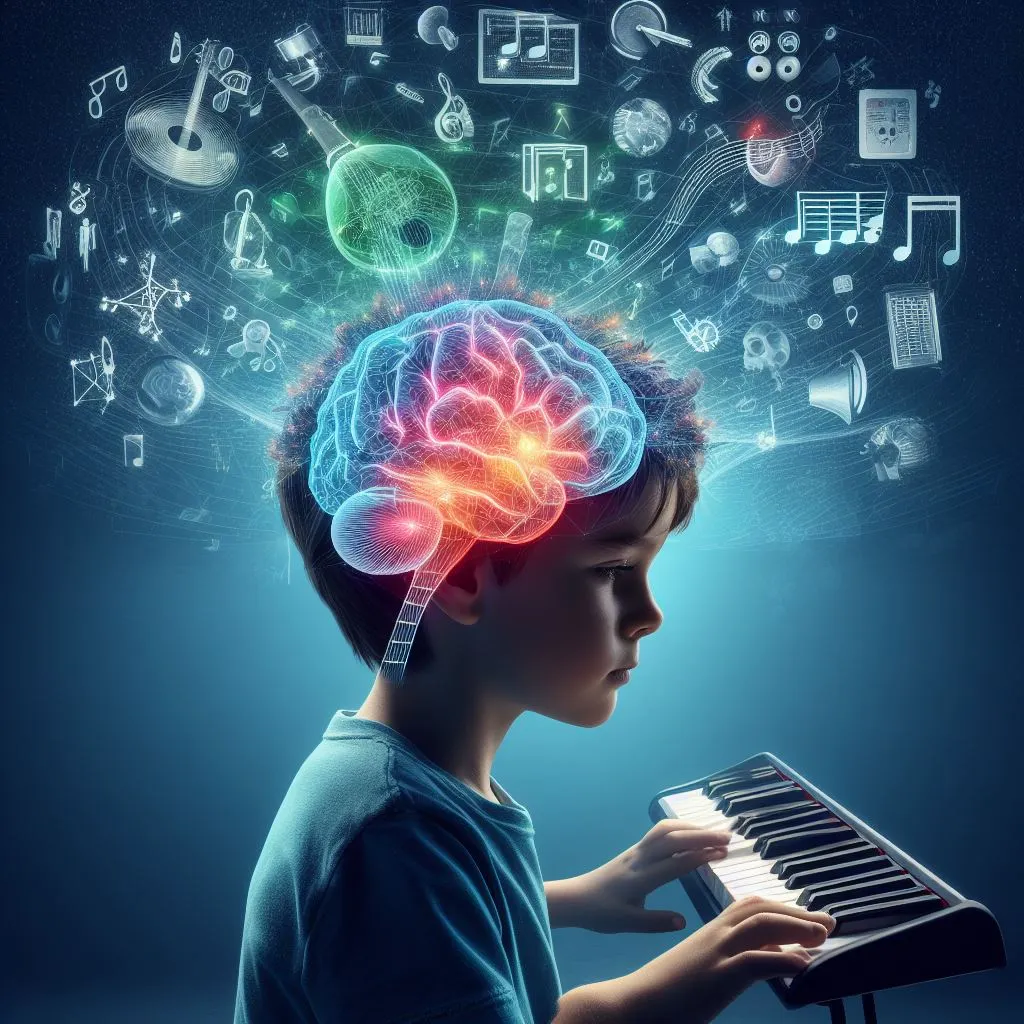
Additionally, regular engagement with music fosters heightened emotional awareness. Music serves as a powerful medium for children to express their feelings and understand the emotions of others, making it a vital aspect of their emotional education. For example, children exposed to varied musical genres often develop an appreciation for cultures and experiences different from their own, contributing to a more empathetic worldview.
In summary, the exploration of musical practice reveals a multidimensional impact on children’s cognitive abilities and personal growth. As educators and parents recognize these connections, they may find compelling reasons to prioritize music education as a pivotal component of childhood development strategies. Delving deeper into this fascinating relationship not only illuminates the potential benefits of music as a sophisticated educational tool but also opens up avenues for further investigation into how music can reshape the learning landscape for future generations.
DISCOVER MORE: Click here to unlock the secrets of consistent practice
Enhancing Cognitive Functions Through Music Education
As the pursuit of knowledge evolves, the conversation about children’s cognitive development increasingly intertwines with the concept of musical practice. Engaging with music is not just about creating melodies or rhythms; it is an enriching experience that significantly enhances various cognitive functions. From boosting academic performance to sharpening critical thinking skills, the implications of musical engagement resonate throughout many aspects of a child’s life.
One of the most compelling discoveries in this field is the relationship between musical education and executive functions. Executive functions refer to a set of cognitive processes that include planning, attention, and problem-solving abilities. A study conducted by Northwestern University revealed that children who engaged in music lessons displayed better performance on tests measuring their executive function compared to those who did not. This correlation can be attributed to music’s inherent structure, which requires children to follow complex patterns and sequences, sharpening their ability to plan and execute tasks.
Musical Practice and Academic Achievement
The academic benefits of musical practice extend to various subjects, particularly in enhancing mathematical competency. Music, often characterized by its rhythmic patterns and underlying mathematical principles, develops a child’s intuitive understanding of numbers. Research by the University of Toronto demonstrated that children who participated in music training consistently outperformed their peers in math tests. The transferability of skills acquired in music—such as recognizing patterns and understanding fractions—further illustrates how music serves as a bridge to mastering mathematics.
The influence of musical engagement on academic performance does not stop at math; there is promising evidence that music improves reading skills as well. A meta-analysis by the International Journal of Music Education showed that early musical training positively impacts phonological awareness, crucial for reading development. Children exposed to music not only learn to decode written words more effectively but also develop a greater enthusiasm for reading, often expressing willingness to explore literature further.
Creating a Multifaceted Learning Environment
The integration of music into educational frameworks not only enhances cognitive skills but also fosters a more holistic learning environment. Schools across the U.S. are increasingly recognizing the importance of incorporating music into the curriculum. A study conducted by the Arts Education Partnership emphasized that music education contributes to student engagement, increased motivation, and even better attendance rates. These findings have prompted numerous educational institutions to reevaluate their music programs and further integrate them into the core curriculum.
- Improvement in memory retention through auditory training.
- Enhanced problem-solving skills derived from understanding musical patterns.
- Better attention span as a result of the discipline required in music practice.
In conclusion, the relationship between musical practice and cognitive development is backed by a wealth of research indicating that music education can be a vital element in enriching children’s cognitive capacities. As educators, parents, and stakeholders invest in nurturing musical talents among young learners, they unlock potential pathways for academic success—confirming that the exploration of music is indeed an exploration of the mind itself.
| Category | Key Features |
|---|---|
| Enhanced Memory Skills | Musical practice has been shown to improve memory retention in children by engaging multiple brain pathways. |
| Improved Language Abilities | Children who regularly engage in music display enhanced phonetic awareness, leading to better reading skills. |
| Cognitive Flexibility | Learning to play an instrument promotes adaptive thinking, allowing children to switch between different concepts easily. |
| Increased Spatial-Temporal Skills | Musical training stimulates spatial reasoning, which correlates with higher performance in mathematics. |
| Social Skills Development | Group music practices foster collaborative skills, teaching children the value of teamwork and communication. |
The insights drawn from the influence of musical practice on cognitive development illustrate the profound effects that music can have on young minds. As children engage with instruments, rhythm, and melody, they are not merely enjoying a pastime; they are enriching their brain’s structure and function. Research indicates that this multidimensional engagement contributes significantly to areas such as memory, language, and critical thinking, presenting compelling evidence for parents and educators alike to consider musical training as a vital element of a child’s education. With each note and harmony, children cultivate essential skills that enhance their overall cognitive framework and enrich their academic journey.
DISCOVER MORE: Click here to learn how music can enhance your creativity
The Social and Emotional Dimensions of Musical Practice
While the cognitive benefits of musical practice are well-documented, it is essential to consider the profound impact that music has on a child’s social and emotional development. Engaging with music not only nurtures the brain but also cultivates essential interpersonal skills that play a critical role in shaping a child’s identity and emotional well-being.
Fostering Collaboration and Communication Skills
Participating in music ensembles, choirs, or bands offers children a unique opportunity to develop collaborative skills. In group settings, children learn to listen attentively to others, harmonize their efforts, and communicate effectively to achieve a common goal. According to a report from the National Association for Music Education, music education can enhance social bonding by providing children with shared experiences that foster mutual respect and teamwork.
Furthermore, group musical practice allows children to express their feelings and thoughts in a safe environment, reducing social anxiety and creating a sense of belonging. In these settings, children learn to negotiate, share ideas, and build trust, skills that are invaluable as they navigate their social worlds both inside and outside school. For instance, a study from the University of New Hampshire found that students involved in group music activities exhibited increased levels of social empathy and emotional intelligence, further highlighting the coalescence of music and emotional growth.
Emotional Expression and Regulation Through Music
Beyond social interactions, musical practice serves as a mode of emotional expression for children. Music gives them an outlet to articulate emotions that they may struggle to convey verbally. From improvising melodies to songwriting, children can channel their feelings—be it joy, sadness, or frustration—into creativity, fostering resilience and emotional awareness.
Moreover, research published in the journal *Psychology of Music* demonstrates that learning and playing music can help reduce symptoms of anxiety and depression in children. Engaging in musical practice provides a therapeutic release, enabling children to process complex feelings in a constructive manner. In this context, music not only enriches their emotional repertoire but also establishes mental fortitude.
The Role of Music in Building Self-Esteem
The interconnectedness of musical practice and self-esteem development cannot be overlooked. As children achieve milestones in their musical journey, be it mastering an instrument or performing in front of an audience, they experience a boost in confidence and self-worth. A study conducted by the University of California, Los Angeles (UCLA), found that music participation significantly correlates with positive self-esteem and academic motivation.
The feeling of accomplishment that comes from learning and performing music—whether it is playing a simple tune or participating in a complex composition—helps children build a growth mindset. This mindset not only enhances their self-image but also encourages them to take on new challenges in various life spheres, further influencing cognitive development and academic achievement.
- Strengthening interpersonal relationships through shared music experiences.
- Enhancing emotional intelligence by expressing feelings through melody.
- Building resilience via coping mechanisms that arise from musical activities.
Ultimately, the intersection of musical practice and social-emotional development reveals a multifaceted dimension that significantly contributes to a child’s overall growth. Emphasizing music in education systems can foster not only intellectual capabilities but also nurture well-rounded individuals equipped with the social skills and emotional intelligence crucial for thriving in today’s interconnected world.
DISCOVER MORE: Click here to learn how creativity can transform lives
Wrapping Up the Harmonious Journey of Cognitive Development
In summary, the multifaceted influence of musical practice on the cognitive development of children is irrefutable and profound. Through engaging in music, children experience a remarkable enhancement of their cognitive abilities, including improved memory, attention span, and problem-solving skills. However, the impact of music extends far beyond mere intellectual gains; it intricately weaves itself into the social and emotional fabric of their development as well.
The benefits derived from collaborative musical experiences highlight the importance of teamwork and communication, while the emotional expressions facilitated by music provide children with a unique outlet for coping with their emotions. This combination lays a strong foundation for self-esteem and resilience, essential attributes for navigating the complexities of adolescence and adulthood.
Furthermore, studies continually underline the importance of early musical education, advocating for its integration into school curricula across the United States. As educators and parents, we must recognize the pivotal role that music education can play in shaping well-rounded individuals. Encouraging children to embrace musical practice fosters not only cognitive skills but also the social and emotional competence necessary for success in an increasingly interconnected world.
Ultimately, the symphony of learning achieved through music paves the way for a brighter future filled with creativity, critical thinking, and harmonious relationships. Investing in musical practice is not just an artistic choice; it is a vital strategy for cultivating a generation poised for success. Let the rhythm of music resonate in our classrooms and homes, creating a harmonious ecosystem for children’s holistic development.