Transform Recyclables into Art DIY Sustainable Projects for Beginners
Introduction
In a world increasingly aware of environmental sustainability, transforming recyclables into art stands out as a captivating intersection of creativity and ecology. Creative hobbies not only allow us to express ourselves but also enable us to make a positive impact on our planet. Engaging in do-it-yourself (DIY) projects encourages individuals to repurpose items that would otherwise contribute to waste.
Moreover, these projects offer numerous benefits:
- Cost-effective: Utilizing materials you already have at home saves money.
- Skill-building: DIY art enhances creativity and problem-solving skills.
- Personal expression: Reimagined materials can reflect unique artistic visions.
As you embark on this journey of transformation, you’ll discover innovative ways to bring your ideas to life. In this article, we’ll explore the Top 5 DIY sustainable projects that are perfect for beginners, providing step-by-step guidance and inspiring examples. Get ready to unleash your creativity while contributing to a greener world!
Top 5 Transformations of Recyclable Materials into Art: Sustainable DIY Projects for Beginners
Recycling has evolved beyond its fundamental goal of waste management, transforming into a dynamic expression of creativity and personal style. Whether you are an aspiring artist or someone looking to add a unique touch to your living space, transforming recyclable materials into art offers a gratifying and eco-friendly outlet. By harnessing everyday disposables in novel ways, these projects invite you to rethink waste as the canvas for innovation and creativity. Let’s delve into the top five DIY projects that arm beginners with the tools to engage in sustainable art crafting, contributing to environmental sustainability while tapping into their artistic potential.
5. Decorative Jars and Containers
The transformation of decorative jars and containers serves as an ideal starting point for those new to sustainable art projects. By utilizing glass jars, plastic containers, and tin cans that typically end up in landfills, you turn clutter into charming accents for your home. Not only is this a cost-effective solution, but it’s also simple and highly customizable:
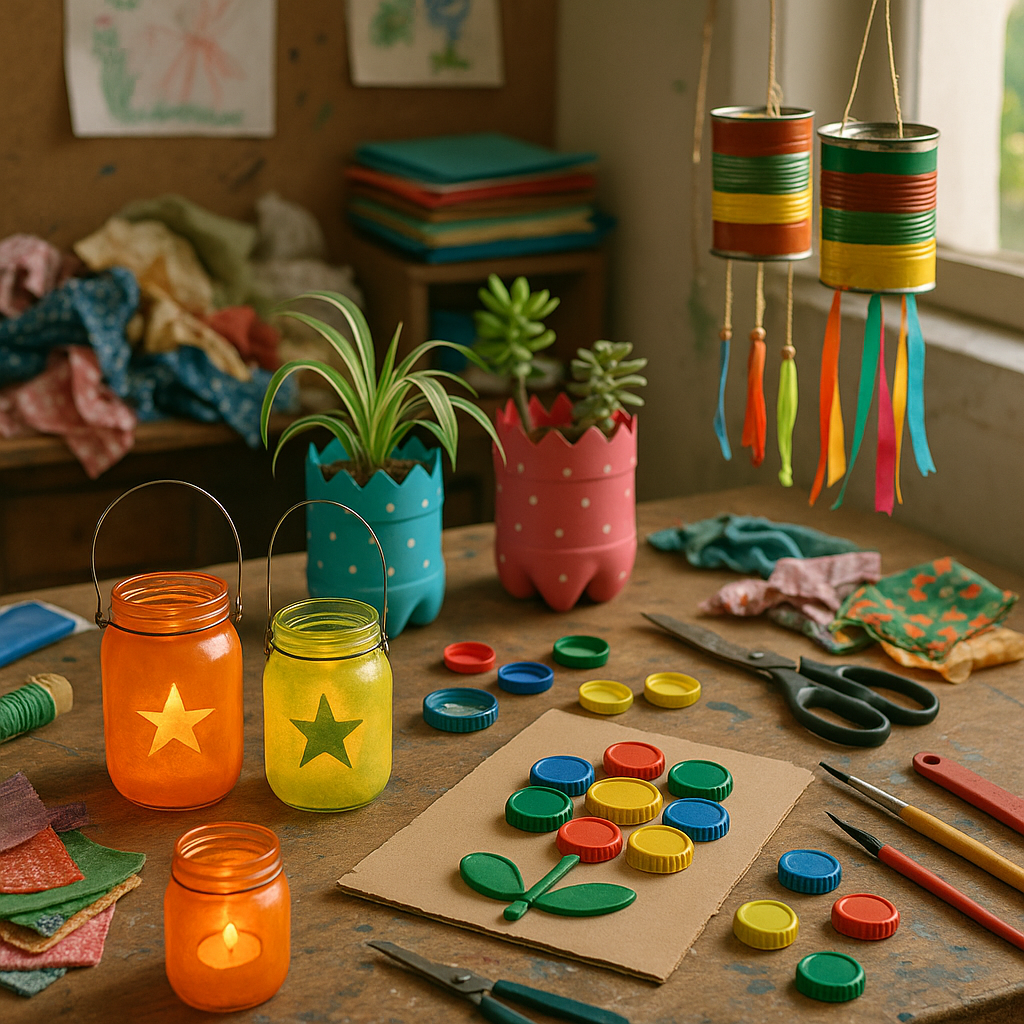
- Gather materials: Scour your pantry, recycling bins, or even thrift stores for jars, bottles, and cans of diverse shapes and sizes.
- Clean thoroughly: Soak containers to remove labels and residue, ensuring a pristine base suitable for decoration.
- Get creative: Let your imagination run wild by using paint, decoupage techniques, embellishments such as twine or beads, and even stencils to tailor your designs.
Decorative jars can serve multiple functions—acting as vases, pen holders, or unique organizers. This project not only enhances your home’s aesthetic but also instills an appreciation for the potential of everyday objects.
4. Upcycled Garden Treasures
For those captivated by the beauty of the outdoors, upcycling recyclable materials into garden decorations offers an avenue to seamlessly blend art with nature. These projects breathe new life into unwanted items, creating garden features with character and sustainability.
- Bicycle Planters: Convert discarded bicycles into rustic planters. Strip away the excess parts, apply a coat of vibrant paint, and load the frame with soil and your favorite flora.
- Wine Bottle Borders: Introduce a touch of whimsy with wine bottle borders. After cutting the bottles, use them to frame pathways or segment different garden beds.
- Plastic Bottle Birds: Craft playful bird feeders using plastic bottles. Cut the base to form a trough for seeds and attach perches for easy bird access.
Such projects not only augment your garden’s aesthetic appeal but foster an interconnectedness with nature, emphasizing the importance of environmentally conscious living.
3. Bottle Cap Art
Engaging in bottle cap art is a vibrant way to incorporate color and creativity into your home. This project is accessible to beginners and allows for immense versatility in design. It’s a perfect platform to hone your artistic skills without requiring extensive crafting knowledge:
- Wall Art: Assemble and secure bottle caps in creative patterns or motifs on canvases or plywood boards. The resulting mosaic offers a playful and colorful display.
- Magnet Making: Attach magnets to the back of caps to craft functional, decorative fridge magnets that can hold notes or photographs.
- Coasters: Glue caps together into desired shapes, and reinforce with cork or felt backings for durable, eye-catching coasters.
Every piece of bottle cap art not only contributes to waste reduction but encapsulates a unique story, inviting onlookers to appreciate both its utility and beauty.
2. Cardboard Creations
The potential of cardboard in art often goes unnoticed, yet it offers a versatile medium to explore creative boundaries. Particularly appealing to novices looking for an accessible way to delve into structural artistry, cardboard projects range from simple to complex:
- 3D Models: Design and assemble intricate models, from architectural replicas to imaginative creatures. These constructions encourage spatial thinking and detail orientation.
- Wall Art: Craft wall decorations by cutting and layering cardboard into layered patterns or scenes, often creating a textured, dimensional effect.
- Costumes: Craft inventive costumes or accessories for themed events, cosplay, or theater, exploring the material’s flexibility.
Cardboard art transforms the humble material into forums for imagination, proving that with creativity, even the most mundane items can become captivating art forms.
1. Fabric Scrap Crafts
Fabric scrap crafts reserve a special place in the realm of recyclable art projects, offering richness in color and texture that few materials can match. This sustainable practice not only reduces fabric waste but empowers crafters to tell stories through patchwork and design:
- Patchwork Quilts: Piece together an assortment of fabric to form distinctive quilts—each square a fragment of history, tailored into a warm, functional piece of art.
- Rag Rugs: Weave or braid pieces of fabric to create rugs that bring comfort and personality to a space, exuding rustic charm and utility.
- Decorative Pillows: Construct one-of-a-kind pillow covers using patchwork techniques, adding flair to sofas or bedroom decor with unique pattern combinations.
Fabric art challenges individuals to view textiles as a medium for sustainability and creativity, paving the way for a colorful world where environmental consciousness and artistry flourish side by side.
Each of these projects embodies the transformative power of art, redefining recyclables as resources rather than refuse. Through creative exploration, these projects not only mitigate waste but instill a sense of value and potential in objects often overlooked. Whether you venture into it as a hobby or with a mission for sustainability, reclaiming and transforming recyclables into art is not only transformative for the materials but for the artist as well.
| Category | Description |
|---|---|
| Environmental Impact | Transforming waste into art significantly reduces landfill contributions. Engaging in DIY projects using recyclable materials not only promotes sustainability but also conserves natural resources by minimizing the need for new raw materials. |
| Creative Expression | Each project serves as a canvas for individual expression, allowing beginners to explore their creativity. Utilizing unconventional materials reveals the unique potential in everyday items, transforming them into something extraordinary. |
| Cost Efficiency | Creating art from recycled materials drastically cuts costs associated with traditional art supplies. A person can build a wide array of projects using items found at home, making art accessible to everyone regardless of their budget constraints. |
| Community Engagement | These art projects can foster community participation, as workshops and exhibitions can bring together individuals who share a passion for sustainability. Collaborating with others enhances skills and broadens networking opportunities in the art community. |
The synergy between art and recycling opens doors for individuals, especially beginners, to embark on a joyful journey towards sustainability. By creating something beautiful out of what was once considered waste, you not only tap into your creative potential but also contribute positively to the planet. Embracing this approach can lead to innovative solutions to environmental challenges and foster a culture that values resourcefulness. Each project reflects the ability to see beyond the ordinary, igniting a passion for both art and environmental stewardship.
FAQs on Transforming Recyclable Materials into Art: Sustainable DIY Projects for Beginners
What types of recyclable materials can be used in art projects?
There is a plethora of recyclable materials that can be transformed into art. Common items include paper, cardboard, plastic bottles, glass jars, and metal cans. Each of these materials offers unique textures and properties, allowing for a wide range of creative possibilities. Additionally, using old newspapers, magazines, and even fabric scraps can infuse a project with unexpected depth and interest.
How do I prepare recyclable materials for crafting?
Preparation is key to successful crafting with recyclables. Start by cleaning each item thoroughly to remove any residue or labels, which could interfere with paint adherence or the overall finish. For certain materials, such as glass, it may be necessary to sand edges to ensure they are smooth and safe to handle. Many artists suggest categorizing materials by type and size to streamline the creative process and make the search for components more efficient.
Are there specific tools needed for DIY art projects with recyclables?
Yes, having a basic toolkit can significantly enhance your DIY journey. Essentials often include scissors, craft knives, glue guns, and different types of adhesives suited to various materials such as wood glue or epoxy. Depending on the complexity of your projects, you might also require brushes, paints, and additional decorative elements. As you grow more experienced, experimenting with more specialized tools like soldering irons or sewing machines can broaden your artistic scope.
Can children safely participate in these sustainable DIY projects?
Absolutely, with proper supervision and guidance, children can engage in sustainable art projects and benefit from the creative process. Make sure to choose age-appropriate activities and materials, ensuring that non-toxic supplies are used, especially with younger kids. Art projects can be a wonderful way to build environmental awareness and impart crafting skills in a fun and exciting manner. Always prioritize safety, particularly when working with tools or handling potentially sharp materials.
How can these art projects contribute to environmental awareness?
Engaging in art projects with recyclables is an excellent way to foster environmental consciousness. Through transforming what some see as waste into valuable art, individuals can nurture a respect for materials and understand the importance of recycling. The act of upcycling not only reduces waste but also encourages creativity and resourcefulness, promoting a culture of sustainability that can inspire both the artist and the audience to consider their impact on the planet.
Conclusion: Unleashing Creativity and Sustainability
Transforming recyclable materials into art through DIY projects opens up a world of creative expression while promoting sustainability. This approach creatively repurposes everyday waste into stunning artwork that not only decorates your space but also reflects a commitment to environmental consciousness. Throughout this article, we have explored various projects that inspire beginners to embark on their creative journey.
Key Takeaways
- Unleashing Creativity: Using recyclable materials as a medium allows for unique and personalized creations. Whether it’s turning glass bottles into decorative lamps or repurposing plastic containers into plant pots, the possibilities are endless.
- Skill Building: These projects are perfect for beginners, offering an opportunity to learn new skills while experimenting with different techniques and materials. As confidence grows, so does the complexity of the projects one can undertake.
- Environmental Impact: By reusing materials that would otherwise contribute to waste, these DIY endeavors support environmental conservation, reducing one’s carbon footprint and promoting a sustainable lifestyle.
- Cost-Effective: Recycling and reusing materials is not only good for the planet but also easy on the wallet. It transforms often discarded items into valuable and practical creations.
- Community Engagement: Sharing these projects within communities can stimulate collective creativity and environmental awareness, encouraging others to partake in similar sustainable practices.
Engaging in these projects not only nurtures personal creativity but also fosters a sustainable mindset that can inspire others to adopt similar practices. As this creative movement grows, it has the potential to significantly impact how we perceive waste and art. The fusion of creativity with sustainability offers a refreshing perspective on how art can serve a broader purpose, engaging the artist and the spectator in a dialogue about resourcefulness and environmental responsibility. By embracing this fusion, we encourage a new wave of creative hobbies that leaves a positive mark on our planet.